How to Integrate an AI Receptionist into Your Business
How to Integrate an AI Receptionist into Your Business: The Complete Implementation Guide
Integrating an AI receptionist into your business can revolutionize customer interactions and streamline operations. This comprehensive guide will explore the essential steps to successfully implement an AI receptionist, highlighting its benefits and practical applications. As businesses increasingly seek efficiency and enhanced customer service, understanding how to leverage AI technology becomes crucial. Many organizations struggle with managing customer inquiries and appointments effectively, leading to missed opportunities and decreased satisfaction. An AI receptionist offers a solution by automating these tasks, ensuring extended availability and improved operational efficiency. In this article, we will cover the definition and benefits of AI receptionists, key integration steps, software selection criteria, integration with existing systems, optimization strategies, and real-world use cases.
What Is an AI Receptionist and How Does It Benefit Your Business?
An AI receptionist is a virtual assistant powered by artificial intelligence that handles customer interactions, such as answering calls, scheduling appointments, and managing inquiries. By utilizing natural language processing and machine learning, AI receptionists can understand and respond to customer needs effectively. The primary benefit of implementing an AI receptionist is the enhancement of customer service, as it provides immediate responses and support, reducing wait times and improving satisfaction.
What Are the Core Functions of an AI Receptionist?
AI receptionists perform several core functions that significantly enhance business operations:
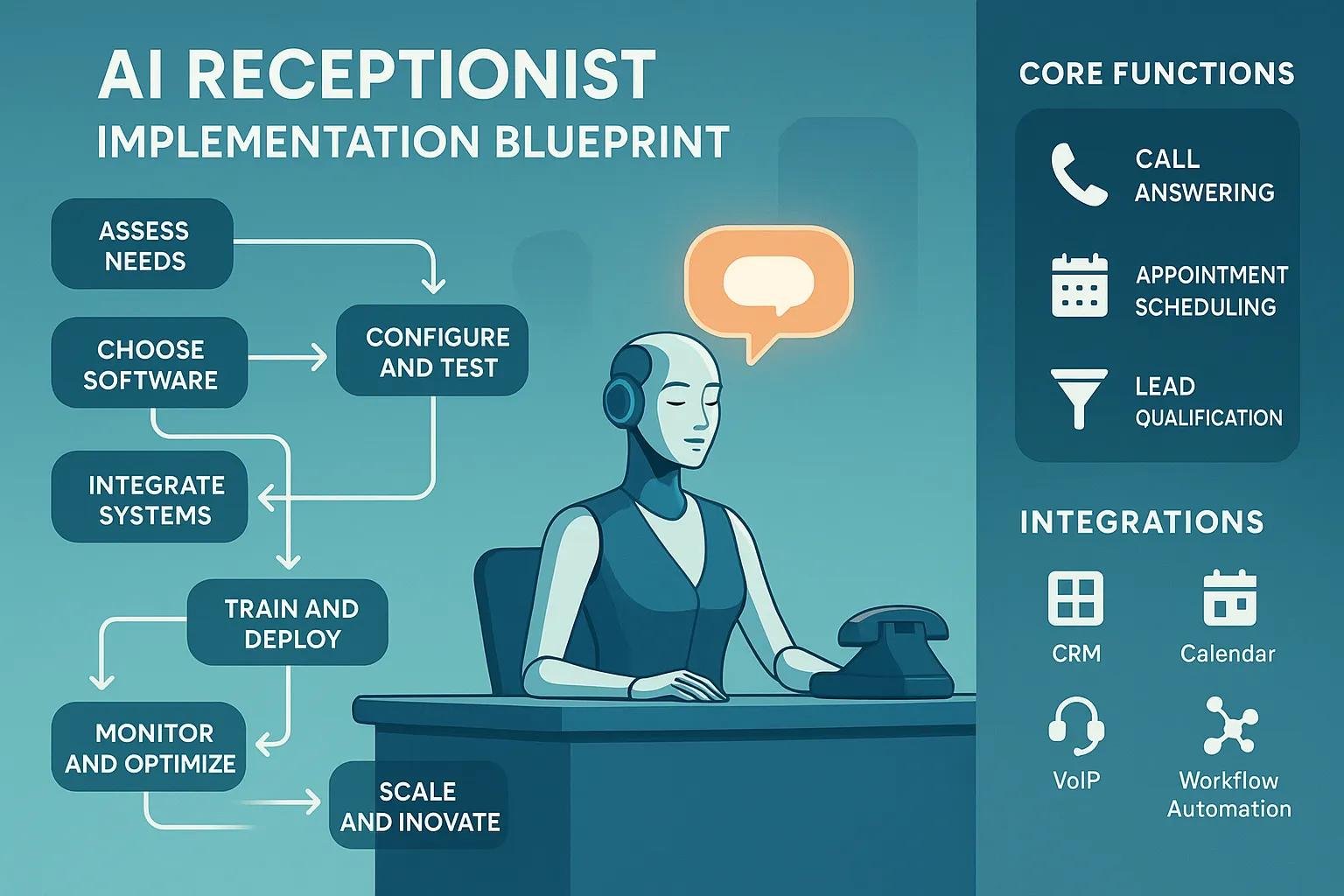
Call Answering: They can handle incoming calls, providing information and directing inquiries to the appropriate departments.
Appointment Scheduling: AI receptionists can manage calendars, book appointments, and send reminders to clients.
Lead Qualification: They can engage with potential customers, gather information, and qualify leads for sales teams.
These functions not only improve efficiency but also allow human staff to focus on more complex tasks, ultimately driving productivity.
How Does an AI Receptionist Improve Customer Service and Operational Efficiency?
AI receptionists enhance customer service by providing extended availability, ensuring that customer inquiries are addressed promptly, regardless of the time of day. This accessibility leads to increased customer satisfaction and loyalty. Additionally, by automating routine tasks, businesses can reduce operational costs and minimize human error. For instance, companies that have integrated AI receptionists report cost savings and improved response times, which are critical in today’s fast-paced business environment.
What Are the Key Steps to Successfully Integrate an AI Receptionist?
Integrating an AI receptionist into your business involves several key steps that ensure a smooth transition and effective implementation.
How to Assess Your Business Needs for AI Receptionist Integration?
Before integrating an AI receptionist, it is essential to assess your business needs. Consider the following factors:
Identifying Pain Points: Determine the areas where customer service is lacking or where operational inefficiencies exist.
Determining Budget: Establish a budget for the integration process, including software costs and potential training expenses.
Setting Goals: Define clear objectives for what you hope to achieve with the AI receptionist, such as improved response times or increased appointment bookings.
This assessment will guide your integration strategy and help you select the right tools and features.
What Is the Step-by-Step Setup and Configuration Process?
The setup and configuration of an AI receptionist typically involve the following steps:
Initial Setup Steps: Begin by selecting the AI receptionistsoftware that best fits your business needs.
Configuration Settings: Customize the software settings to align with your business processes, including call routing and appointment scheduling.
Testing the System: Conduct thorough testing to ensure the AI receptionist functions correctly and meets your expectations.
Following these steps will help ensure a successful integration of the AI receptionist into your business operations.
How to Choose the Right AI ReceptionistSoftware for Your Business?
Selecting the right AI receptionistsoftware is crucial for maximizing its benefits.
Which Features Should You Look for in AI Receptionist Solutions?
When evaluating AI receptionist solutions, consider the following essential features:
NLP Capabilities: Ensure the software has robust natural language processing capabilities for effective communication.
Integration Options: Look for software that can easily integrate with your existing systems, such as CRM and calendar applications.
Scalability: Choose a solution that can grow with your business, accommodating increased customer interactions over time.
These features will enhance the functionality and effectiveness of your AI receptionist.
How Do Pricing Models and Software Comparisons Influence Your Choice?
Understanding the pricing models of different AI receptionist solutions is vital for making an informed decision. Consider the following:
Different Pricing Models: Some software may offer subscription-based pricing, while others may have a one-time purchase fee or usage-based pricing.
Cost-Benefit Analysis: Evaluate the potential return on investment by comparing the costs of the software against the expected benefits, such as time savings and increased customer satisfaction.
Comparison of Top Software: Research and compare various AI receptionist solutions to find the one that best meets your needs and budget.
This analysis will help you select the most suitable software for your business.
How to Integrate AI Receptionists with Existing Business Systems?
Integrating AI receptionists with your existing business systems is essential for seamless operations.
What Are Best Practices for CRM and Calendar Integration?
To ensure effective integration with CRM and calendar systems, follow these best practices:
Choosing Compatible Systems: Select AI receptionistsoftware that is compatible with your current CRM and calendar tools.
Data Synchronization: Ensure that data is synchronized between systems to maintain accurate records and avoid duplication.
User Training: Provide training for staff on how to use the integrated systems effectively.
These practices will facilitate a smooth integration process and enhance overall efficiency.
How to Connect AI Receptionists with VoIP and WorkflowAutomation Tools?
Connecting AI receptionists with VoIP and workflowautomation tools can further streamline operations. Here’s how:
Integration Steps: Follow the software’s guidelines to connect the AI receptionist with your VoIP system for seamless call handling.
Common Tools Used: Utilize popular workflowautomation tools to enhance the AI receptionist's capabilities, such as automating follow-up emails or notifications.
Troubleshooting Tips: Be prepared to troubleshoot common issues that may arise during integration, such as connectivity problems or software conflicts.
By effectively connecting these systems, businesses can maximize the benefits of their AI receptionist.
How to Optimize and Troubleshoot Your AI Receptionist for Peak Performance?
Once integrated, optimizing and troubleshooting your AI receptionist is crucial for maintaining performance.
What Are Common Challenges During AI Receptionist Integration?
Several challenges may arise during the integration of an AI receptionist, including:
Technical Issues: Software compatibility problems can hinder integration efforts.
User Resistance: Employees may be hesitant to adopt new technology, impacting overall effectiveness.
Data Privacy Concerns: Ensuring compliance with data protection regulations is essential when handling customerinformation.
Addressing these challenges proactively will help ensure a successful integration.
How to Continuously Train and Refine Your AI ReceptionistSystem?
Ongoing training and refinement of your AI receptionistsystem are vital for optimal performance. Consider these strategies:
Feedback Loops: Implement mechanisms for gathering user feedback to identify areas for improvement.
Regular Updates: Keep the software updated to benefit from the latest features and security enhancements.
Performance Metrics: Monitor key performance indicators to assess the effectiveness of the AI receptionist and make necessary adjustments.
These practices will help maintain the AI receptionist's effectiveness over time.
What Are Real-World Use Cases and Future Trends in AI ReceptionistTechnology?
AI receptionisttechnology is rapidly evolving, with various industries adopting it to enhance customer service.
Which Industries Benefit Most from AI Receptionist Solutions?
Several industries are leveraging AI receptionist solutions to improve operations:
Healthcare: AI receptionists can manage patient inquiries and appointment scheduling, reducing administrative burdens on staff.
Legal: Law firms use AI receptionists to handle client communications and streamline case management.
Hospitality: Hotels and restaurants benefit from AI receptionists that manage reservations and customer inquiries efficiently.
These use cases demonstrate the versatility and effectiveness of AI receptionists across different sectors.
What Emerging Innovations Will Shape the Future of AI Receptionists?
The future of AI receptionisttechnology is promising, with several emerging innovations on the horizon:
Predictive AI: Future AI receptionists may utilize predictive analytics to anticipate customer needs and provide proactive support.
Sentiment Analysis: Advanced sentiment analysis capabilities will enable AI receptionists to gauge customer emotions and tailor responses accordingly.
Personalization: Enhanced personalization features will allow AI receptionists to deliver customized experiences based on individual customer preferences.
These innovations will further enhance the capabilities and effectiveness of AI receptionists in the coming years.
